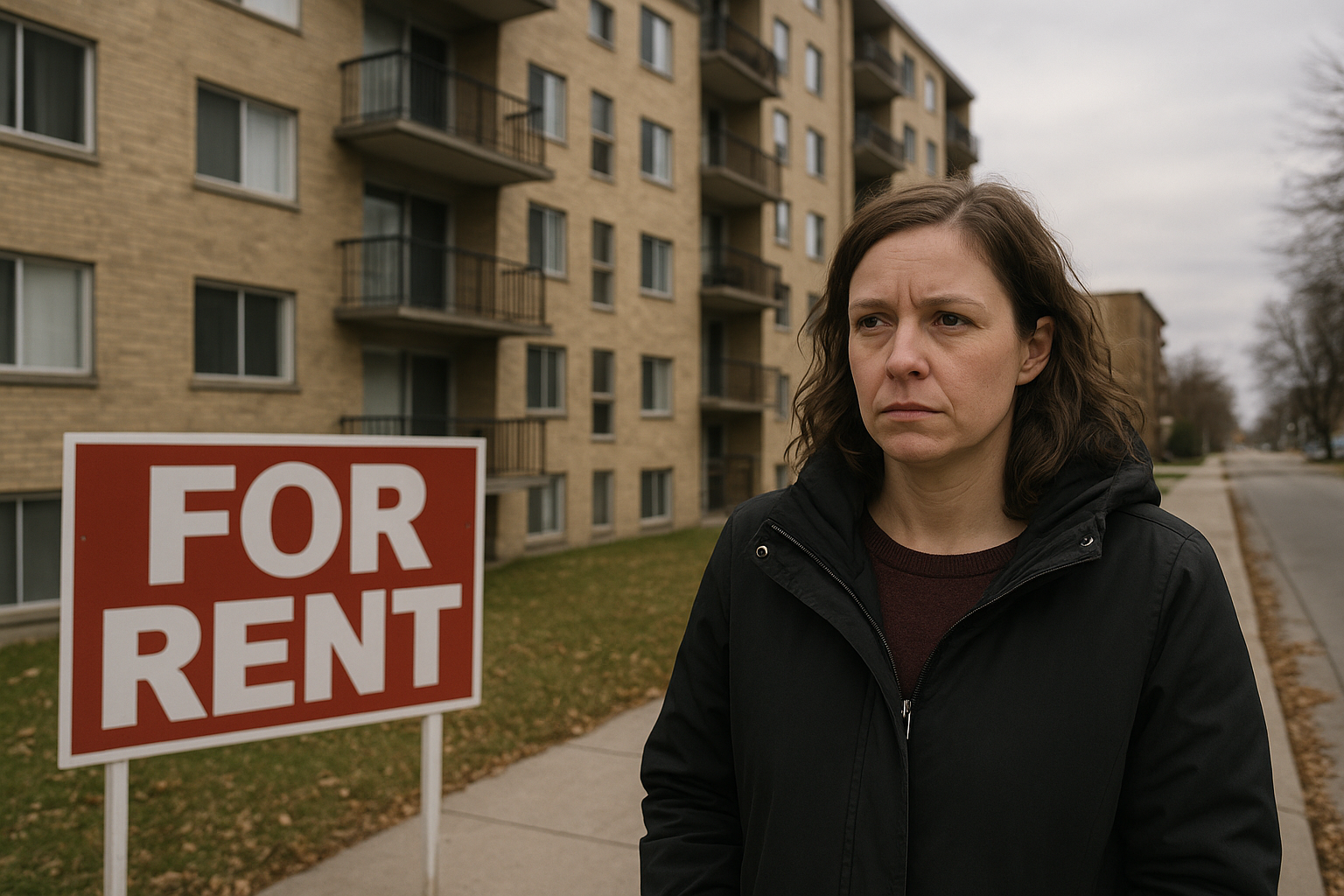
A newly released housing report shows that rental availability in the London region has reached its highest level in more than a decade, offering a rare sign of relief in a market long defined by scarcity. However, tenant advocates warn that higher vacancy rates alone are not enough to ease the financial strain faced by renters, as prices remain stubbornly high and out of reach for many households.
According to the Canada Mortgage and Housing Corporation’s (CMHC) 2025 Rental Market Report, the regional rental vacancy rate now stands at four per cent — the highest it has been in 15 years. While the data points to a growing supply of rental housing and a slight cooling in demand, questions remain about whether these changes will translate into meaningful affordability for tenants.
Rental Supply Reaches a 15-Year High
CMHC’s latest findings highlight a significant shift in the London-area rental market, driven largely by an unprecedented wave of apartment construction over the past several years. The report confirms that thousands of new rental units have been completed and introduced to the market, contributing directly to the increased vacancy rate.
Construction Boom Changes Market Dynamics
Anthony Passarelli, senior specialist of market insights with CMHC, said the current conditions are the result of sustained investment in purpose-built rental housing.
“You’ve had quite significant increases in rental apartment construction in London in recent years,” Passarelli explained. “Some of those units have been completed and put on the market. So, you’ve had more supply hitting the market.”
This surge in construction marks a notable departure from the previous decade, when rental development lagged behind population growth. For years, low vacancy rates fuelled intense competition among renters, pushing prices higher and limiting choice. CMHC data suggests the additional supply is now beginning to rebalance the market.
Vacancy Rates Reflect Improved Availability
A four per cent vacancy rate is widely considered healthier than the tight conditions that dominated the region throughout much of the 2010s. During that period, vacancy rates frequently hovered well below two per cent, leaving renters with limited bargaining power and few alternatives.
The current figures indicate that prospective tenants now have more options and, in some cases, more time to make housing decisions. However, CMHC cautions that availability does not automatically mean affordability — a distinction that remains central to the ongoing debate.
Demand Softens Alongside Expanding Supply
While the growing number of rental units is a major factor behind the increased vacancy rate, CMHC notes that demand has also eased, further contributing to changing market conditions.
Impact of International Student Enrollment Caps
One of the most influential factors affecting rental demand in London has been a reduction in international student enrollment. The city has long been a major destination for students attending post-secondary institutions, making this population a key driver of rental demand.
“A big part of that is that international student component where in London it’s a strong driver of rental demand,” Passarelli said. “Those numbers have really come down this year, with the international student cap.”
The federal government’s recent cap on international student permits has had ripple effects across several housing markets in Ontario, particularly in cities with large colleges and universities. In London, fewer international students has translated into reduced pressure on rental units, especially in neighbourhoods near campuses.
Shifting Demographics and Household Choices
Beyond student enrollment, CMHC also points to broader demographic and economic factors influencing demand. Rising interest rates over the past year have slowed population inflows, while some residents have delayed moving due to cost-of-living pressures.
These combined forces have softened demand just as new supply has come online, amplifying the impact on vacancy rates. Still, CMHC emphasizes that these trends may fluctuate depending on future immigration policies, economic conditions, and student enrollment levels.
More Units on the Way in 2026 and 2027
Looking ahead, CMHC projects that rental supply in the London region will continue to grow over the next several years. Numerous developments currently under construction are expected to be completed in 2026 and 2027, further increasing the number of available units.
Long-Term Outlook for Rental Availability
Passarelli said the pipeline of upcoming projects suggests vacancy rates could remain elevated in the near term, assuming demand does not rebound sharply.
“The supply will continue to grow in the foreseeable future,” he noted, pointing to the volume of units nearing completion.
This sustained growth could help stabilize the market and prevent the extreme shortages seen in the past. However, CMHC also warns that market balance does not necessarily equate to affordability, particularly if new units are concentrated at higher price points.
Concerns About the Type of Housing Being Built
Many of the newly constructed rental units fall into the category of modern, amenity-rich buildings that often command higher rents. While these developments increase overall supply, tenant advocates argue they may do little to help lower- and middle-income renters who are already struggling.
Tenant Advocates Question Real-World Impact
Despite the encouraging vacancy figures, housing advocates remain skeptical that renters will experience meaningful relief in their monthly housing costs.
Affordability Still Out of Reach for Many
Claire Wittnebel, chair of the Central London chapter of ACORN, a tenants’ rights advocacy organization, said rising vacancy rates do not address the core issue of affordability.
She questions whether renters will see substantial benefits from what she describes as already inflated rents, particularly for long-term tenants and lower-income households.
Tenant groups argue that while more units may technically be available, the majority are priced well above what average renters can afford. In some cases, advertised rents in new buildings exceed existing units by hundreds of dollars per month.
Limited Downward Pressure on Rents
Historically, higher vacancy rates can lead to increased competition among landlords, potentially slowing rent increases or even reducing prices. However, advocates caution that this effect may be muted if landlords maintain high asking rents to offset construction costs and interest rates.
They also note that many tenants remain locked into leases signed during peak market conditions, limiting their ability to benefit from any softening in prices.
Balancing Supply Growth and Housing Equity
The current rental market conditions highlight a growing tension between increasing supply and ensuring housing remains affordable. While developers and policymakers often point to construction as the primary solution to housing shortages, tenant advocates stress that supply must align with income levels.
Calls for Policy Intervention
Advocacy groups continue to call for stronger protections for renters, including rent control measures, expanded affordable housing programs, and incentives for developers to build units at below-market rates.
They argue that without targeted policies, increased supply alone may simply lead to a surplus of high-end rentals, leaving vulnerable populations behind.
CMHC Emphasizes Ongoing Monitoring
CMHC acknowledges these concerns and says it will continue to monitor rental market trends closely. The agency notes that affordability outcomes depend on a complex mix of factors, including wage growth, interest rates, population changes, and government policy decisions.
A Market in Transition
The London region’s rental market appears to be entering a new phase, defined by greater availability and a more balanced supply-demand relationship. For the first time in years, renters may find themselves with more options and slightly less competition.
However, as tenant advocates emphasize, availability does not automatically translate into affordability. While vacancy rates are rising, rents remain high, and many households continue to devote an unsustainable portion of their income to housing.