Introduction
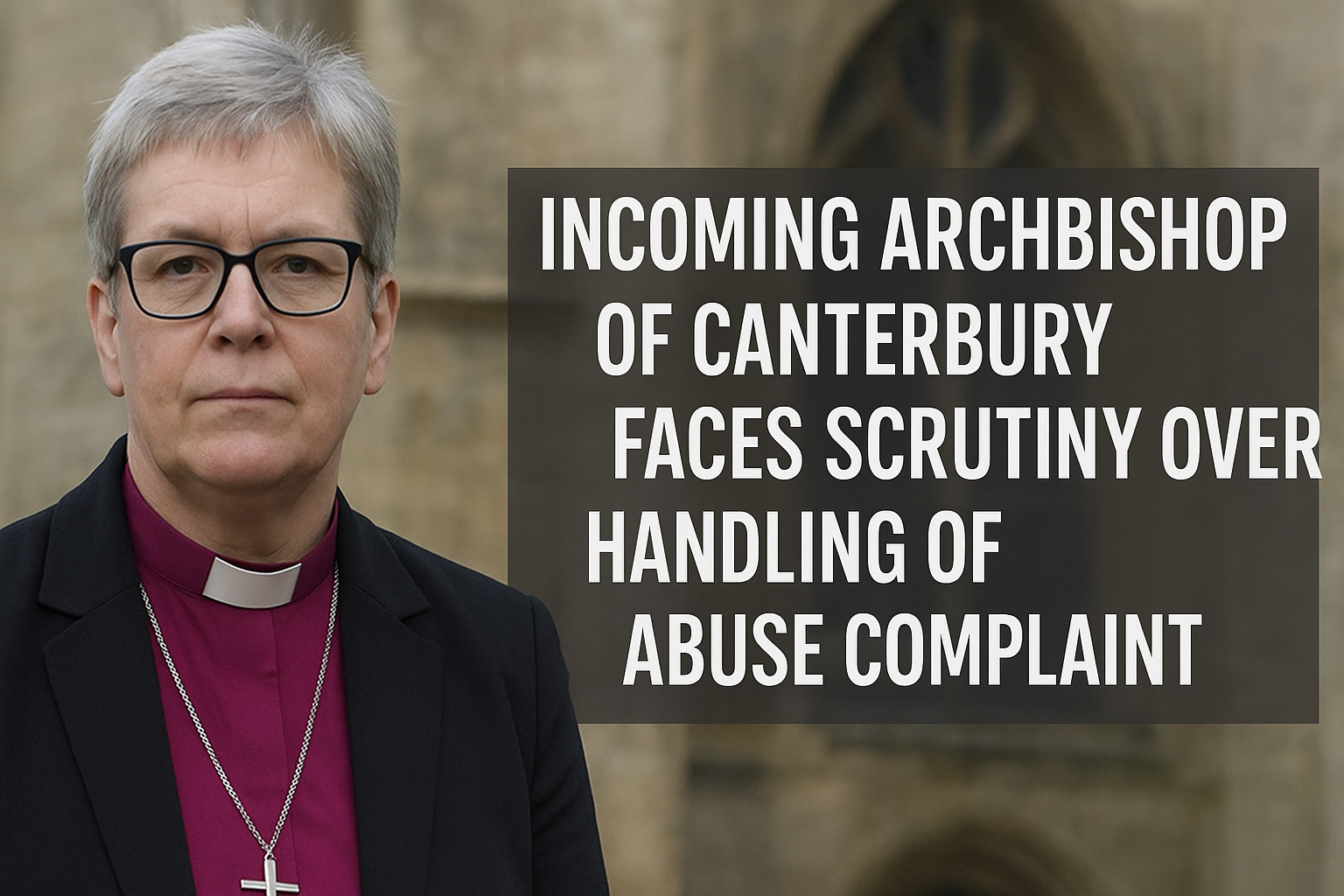
The Church of England is once again confronting serious questions about safeguarding and internal accountability after it confirmed that a formal complaint has been lodged against Dame Sarah Mullally, the incoming Archbishop of Canterbury. Just weeks before she is set to assume the most senior position in the Anglican Church, Dame Sarah is facing allegations that she mishandled a historic complaint involving a priest in the Diocese of London—an accusation that has raised broader concerns about how such issues are addressed at the highest levels of the Church.
The Church acknowledges that although a grievance was submitted against Dame Sarah in 2020, administrative errors and incorrect assumptions prevented the matter from being properly followed up. This revelation has prompted apologies from Church officials and renewed debate over safeguarding procedures, transparency, and clergy accountability.
Complaint Originated in 2020 but Was Not Actioned
According to Church authorities, the complaint was initially made to Lambeth Palace—the official residence and administrative headquarters of the Archbishop of Canterbury. At the time, Dame Sarah, who currently serves as the Bishop of London, was not informed of the grievance, nor was any formal process set in motion.
Administrative Oversight and Breakdown
Officials at Lambeth Palace attributed the failure to act on the complaint to what they described as “administrative errors” and “an incorrect assumption about the individual’s wishes.” In simple terms, Church staff assumed the complainant no longer wished to proceed, despite not confirming this with him. As a result, the matter stalled without ever reaching the diocesan level, where Dame Sarah would typically have been notified.
A spokesperson for Lambeth Palace confirmed that the complainant—identified only as “N”—has now been contacted and informed of the next steps in the complaints process. The Palace also stated that the Bishop of London was unaware of the issue because the complaint never progressed to a stage where she would be officially notified.
Dame Sarah Mullally Responds: “The Victim Was Let Down”
Dame Sarah, set to become the first woman to serve as Archbishop of Canterbury, issued a public statement acknowledging the shortcomings in how the complaint was handled.
Statement from Dame Sarah
“While his abuse allegations against a member of clergy were fully dealt with by the Diocese of London, it is clear that a different complaint he subsequently made against me personally in 2020 was not properly dealt with,” she said. “The victim was let down.”
She also emphasized her expectation that safeguarding and complaint-handling processes must be strengthened:
“I am seeking assurance that processes have been improved to ensure any complaint that comes into Lambeth Palace is responded to promptly and in a satisfactory manner.”
Her comments reflect a broader concern that systemic issues may continue to affect how the Church handles sensitive allegations, despite repeated promises of reform.
Complainant Speaks Out About Mental Health Impact
Earlier this week, the complainant shared his experiences publicly through the Premier Christian website. He described the long-term emotional and psychological toll the mishandling of his case has had on him.
According to Premier’s reporting, the complainant alleged that when he initially filed an abuse complaint against a priest, Bishop Sarah contacted the accused priest directly about the allegations—an action that would violate the Church’s disciplinary protocols. The claim has not yet been adjudicated through formal Church processes, but it is central to the current complaint.
Premier reported that the complainant has provided evidence to support his account. The situation, he said, has severely affected his mental health, particularly because he felt the proper safeguarding measures were not followed.
Church Apologizes and Moves to Restart the Process
A spokesperson for Lambeth Palace confirmed that the provincial registrar has apologized to all parties affected by the administrative failures. They added that “urgent arrangements” are underway to ensure the complaint is now formally considered through the appropriate statutory channels.
The Road to Resolution
While the Church has assured the complainant that the matter will now proceed, his experience adds to a growing list of cases in which victims or complainants say they felt ignored, unheard, or inadequately supported. Safeguarding remains one of the most sensitive and scrutinized areas in Church governance, making the timing of this complaint especially significant.
Dame Sarah’s Historic Appointment
Dame Sarah Mullally’s upcoming installation as Archbishop of Canterbury had been widely celebrated within the Church of England and beyond. A former NHS chief nurse, she entered priesthood in 2006 and rose rapidly through the Church hierarchy. In 2018, she became the first female Bishop of London, one of the most influential leadership positions in the Anglican Communion.
A Leader During a Period of Turmoil
Her selection to succeed Justin Welby was announced in October, following Welby’s resignation amid criticism over his role in a long-running safeguarding scandal. A damning report found that he “could and should” have reported the abusive activities of John Smyth, a prolific abuser linked to the Church, to police as early as 2013.
Due to Welby’s departure and the length of the selection process, the Church has been without a permanent Archbishop of Canterbury for nearly a year. The Archbishop of York, Stephen Cottrell, has been assuming most of the responsibilities in the interim.
Wider Leadership Challenges Within the Church
The safeguarding issues emerging around Dame Sarah’s appointment come at a time when the Church of England is grappling with multiple leadership controversies. Archbishop Stephen Cottrell himself has faced calls to resign over his handling of a separate abuse case, raising questions about institutional consistency and accountability.
A Church Struggling to Rebuild Trust
As the Church seeks to restore public faith in its safeguarding systems, each new allegation or administrative failure compounds longstanding concerns among members, victims, and external observers. The need for rigorous review and independent oversight remains a recurring theme in public discourse surrounding the institution.
What Happens Next?
The formal complaint against Dame Sarah Mullally will now be addressed through the Church’s statutory process for clergy discipline. This will likely involve an independent assessment to determine whether any protocols were breached and whether further action is warranted.
Ensuring Transparency Going Forward
Church officials insist they have already taken steps to address the administrative problems that caused the complaint to lapse in 2020. However, many within the Anglican community will be watching closely to see how the process unfolds—especially given Dame Sarah’s impending role as the spiritual leader of millions of Anglicans worldwide.
Conclusion
As Dame Sarah prepares to take office on 28 January, the unresolved safeguarding complaint presents an unexpected challenge at a critical moment for the Church of England. While she maintains that processes must be strengthened, the case highlights systemic vulnerabilities that the Church has been repeatedly criticized for failing to fix.
The coming weeks will be crucial—not only for Dame Sarah’s leadership credibility but also for the Church’s ongoing effort to demonstrate that it takes safeguarding and accountability seriously. The handling of this complaint may well set the tone for her tenure as Archbishop of Canterbury.